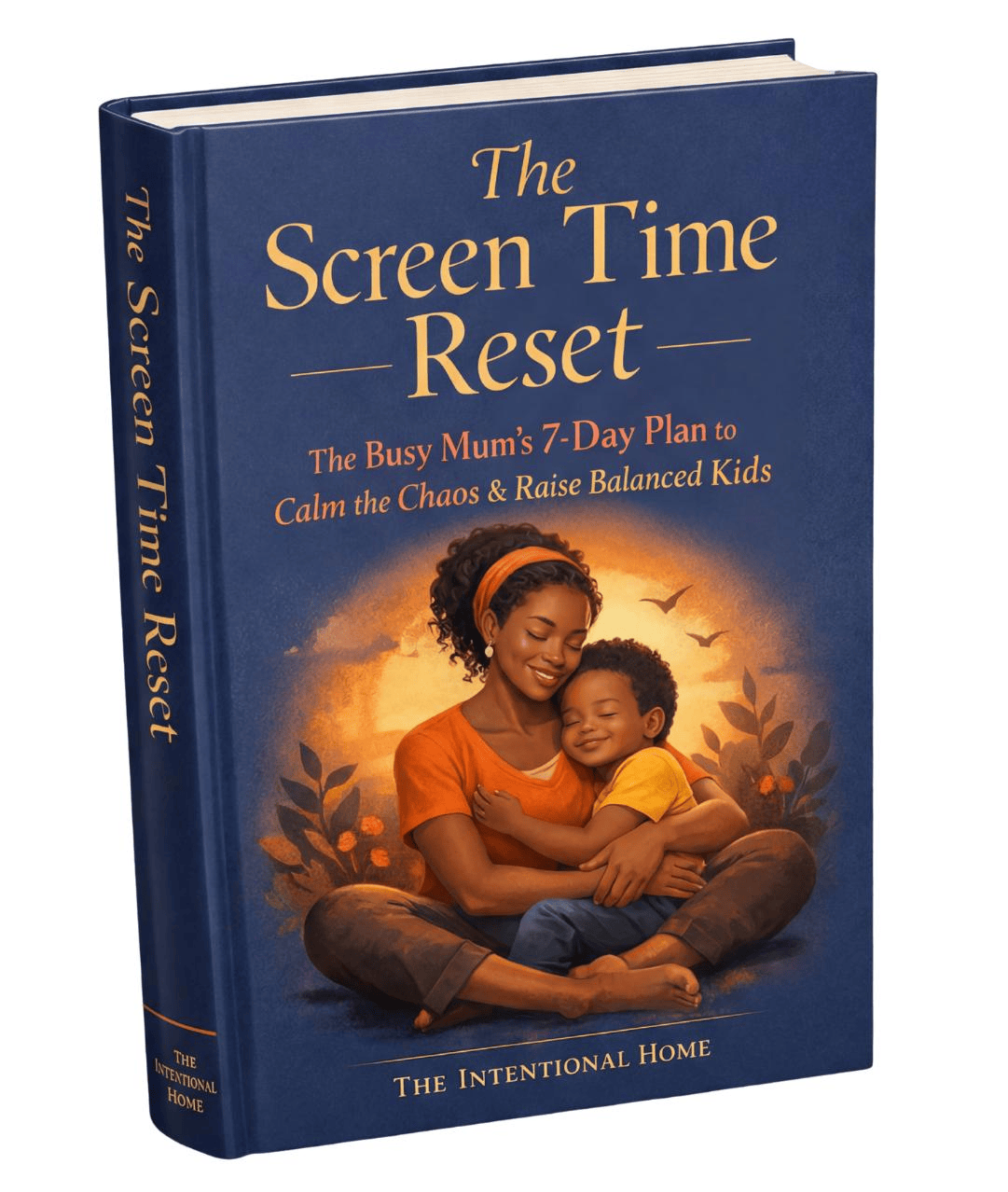


WARNING: What I'm about to share might contradict everything you've been told about screen time and children's behavior...
From: A Busy Mum of Three Children: Home finally peaceful
If you're reading this, chances are you've already tried to fix the screen time problem in your home. You've set rules, made threats, taken devices away, and given them back twenty minutes later just to stop the crying.
I know exactly how you feel. Because not long ago, I was you.
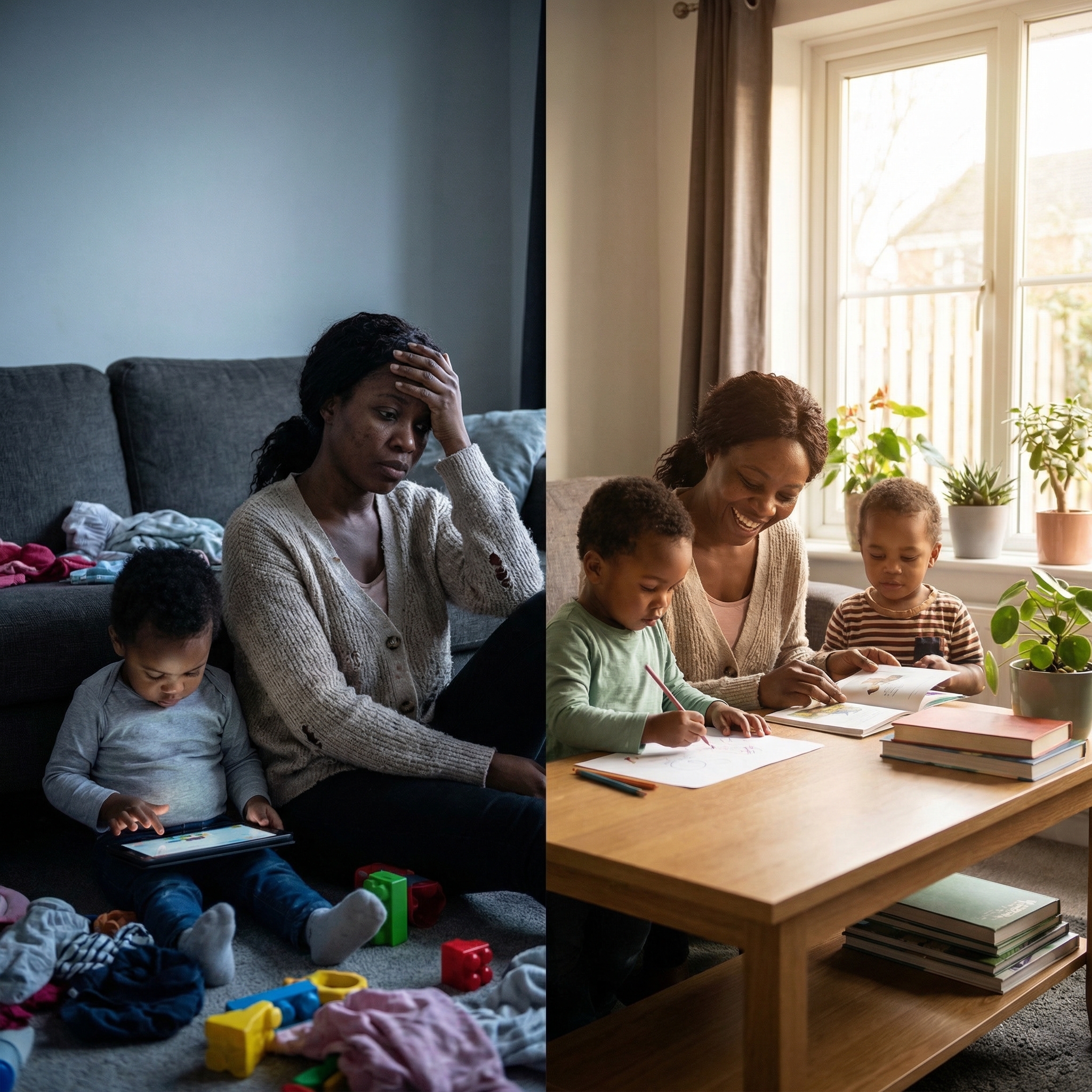
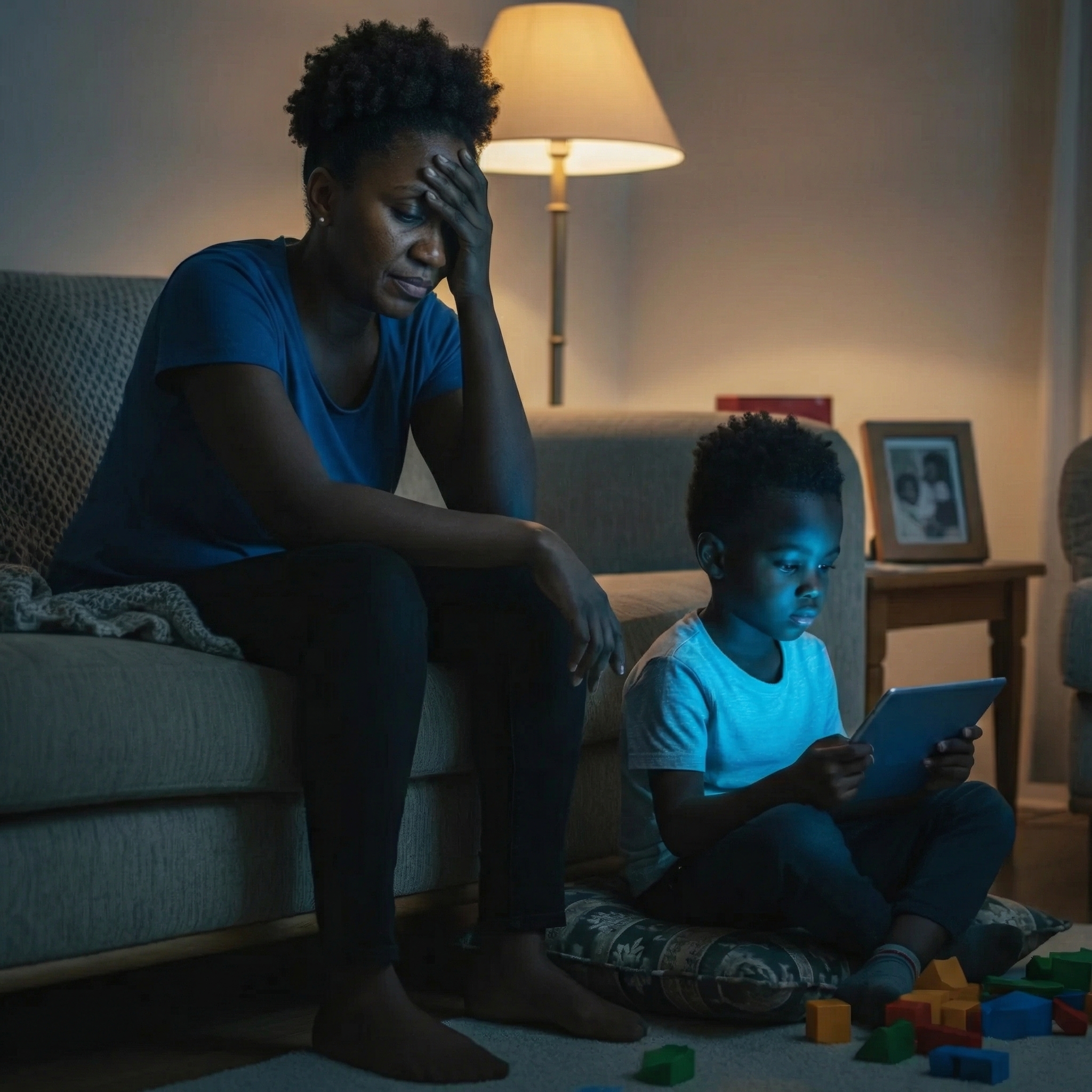
I was a working mum with three children, ages 5, 7, and 10. On the surface, everything looked fine. But every evening, my home turned into a battlefield. Screens on, mummy says stop, children argue, mummy shouts, everyone goes to bed angry and guilty. Then we'd wake up and do it all over again.
I tried everything:
- ● Cold turkey - lasted exactly four hours before I gave the phone back to stop the crying
- ● Screen time timers - didn't stop the battle, just moved it. Now we fought about the timer instead
- ● Bargaining - "finish your homework and you can watch TV" which only taught my children that screens were the ultimate prize worth fighting for
- ● Shouting - achieved nothing except a sore throat and a guilty conscience
My biggest struggle was feeling completely alone in it. Like every other mum had figured something out that I hadn't. And the guilt because I knew that some of those screen hours happened because I handed them the phone myself. When I needed silence. When I was too tired to engage.
"Then one Thursday evening, everything changed."

I sat at my kitchen table with a cold cup of tea and just started writing. Pouring out everything that was going wrong. And somewhere in the middle of that, I saw it, every single approach had failed because I was always reacting. I had no structure before the crisis. No replacement. No rhythm.
And then I discovered something that changed how I saw the entire problem.
My children were not being difficult. Their brains had been chemically rewired.
Every time they picked up a screen, their brain released dopamine, the reward chemical. Over time, their brains had been quietly trained to expect that hit constantly. So when I took the screen away, I wasn't just removing a tablet. I was triggering a dopamine withdrawal.
That is why my 7-year-old rolled on the floor screaming over a cartoon. To his brain, I had taken away something it genuinely needed. No amount of shouting or rule-setting can override a neurological craving.
"I needed to displace it, not fight it."
So I stopped trying to take something away. And I started filling the space with something better.
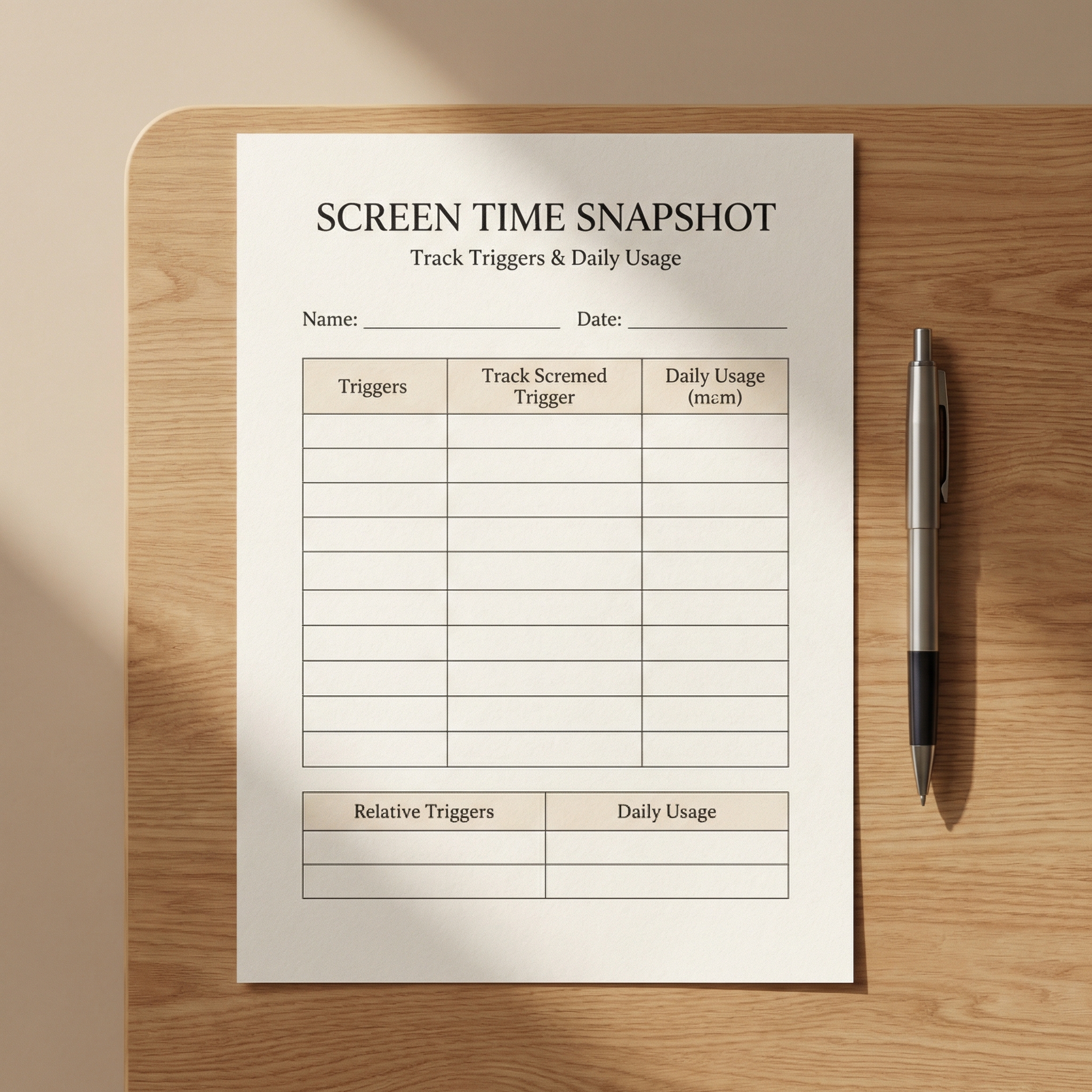
I built six simple tools around this one insight and in just 7 days:
- ● Screen time dropped from 4–5 hours daily to 90 minutes
- ● My 9-year-old's teacher sent home a compliment note about his focus in class
- ● My youngest filled an entire notebook with drawings
- ● Bedtime went from a 45-minute negotiation to fifteen minutes
- ● And on a Friday evening I had mentally prepared for battle, my son checked the chart, said "okay," and walked away. Without a single argument.
I stood in my kitchen and cried.
Because I hadn't just reduced screen time. I had rebuilt the culture of my home.
And now, for the first time I'm sharing the exact system that made it possible.